
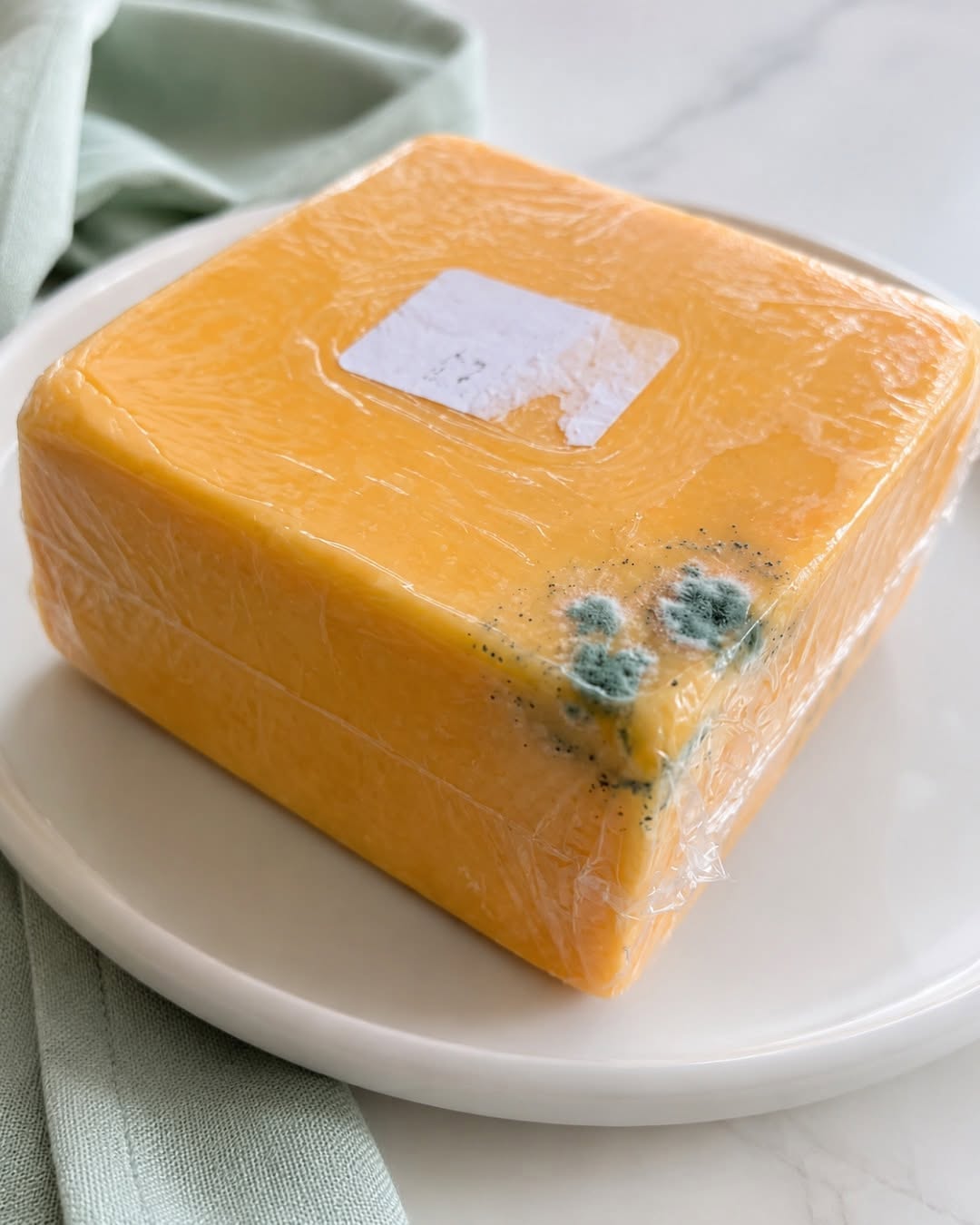
You open the fridge, already halfway into dinner mode. Maybe you’re thinking grilled cheese, maybe a quick pasta—something easy. Then you see it. A fuzzy little green patch on your block of cheddar.
And just like that, everything pauses.
Do you cut around it? Throw the whole thing away? Stand there for 30 seconds staring at it like it might answer you?
Honestly, we’ve all been there.
This isn’t just about cheese—it’s about not wasting food, not wasting money, and also not doing something you’ll regret later. So let’s talk through it, calmly, like two people in a kitchen trying to make a smart call.
First Things First… How Bad Is That Mold, Really?
Here’s the part most people don’t realize: not all mold is the enemy.
Some cheeses are literally built around mold—think blue cheese, for example. But cheddar? That’s not supposed to be part of the deal.
What you’re seeing is usually a type of mold called Penicillium. Sounds scientific, but in plain terms—it’s common. It shows up when conditions are right: moisture, air, time.
Now, does that mean it’s dangerous?
Not necessarily.
For most people, a small patch on a hard cheese isn’t a health emergency. The bigger concerns are:
Allergies or sensitivities
Breathing in spores (rare, but worth noting)
Or deeper contamination you can’t see
So no—don’t panic. But don’t ignore it either.
The Cheese Type Changes Everything (Seriously)
Here’s where things get a little more clear—and a little more strict.
Hard cheeses (like cheddar):
Dense structure
Mold tends to stay on the surface
Usually salvageable
Soft cheeses (like brie, ricotta, cream cheese):
High moisture
Mold spreads invisibly inside
Not salvageable
So if this were brie? Different conversation. You’d be tossing it, no hesitation.
But cheddar gives you a little wiggle room.
Take a Closer Look (And Yes, Smell It)
Before you grab a knife, pause for a quick inspection. It takes 20 seconds and can save you from making the wrong call.
Look for:
Multiple mold spots (not great)
Odd colors like black, pink, or orange (worse)
Any spreading beyond the obvious patch
Smell it:
Sharp cheddar smell? Fine
Sour, ammonia-like smell? That’s your sign to stop
Touch it:
Still firm? Good
Slimy or weirdly soft? Not good
If everything else looks normal, you’re probably in safe territory to trim it.
How to Cut It Off Without Making It Worse
This is the part people mess up—cutting too close.
Here’s the right way:
Use a clean, sharp knife
Cut at least 1 inch (2.5 cm) around and below the mold
Don’t slice straight through the mold and keep going—that drags spores into the good part
Cut wide, then discard the moldy portion immediately
It might feel like you’re sacrificing a bit more cheese than necessary. You are. That’s the point.
Better safe than sorry.
When It’s Not Worth Saving (Even If It Hurts a Little)
For Complete Cooking STEPS Please Head On Over To Next Page Or Open button (>) and don’t forget to SHARE with your Facebook friends.
