
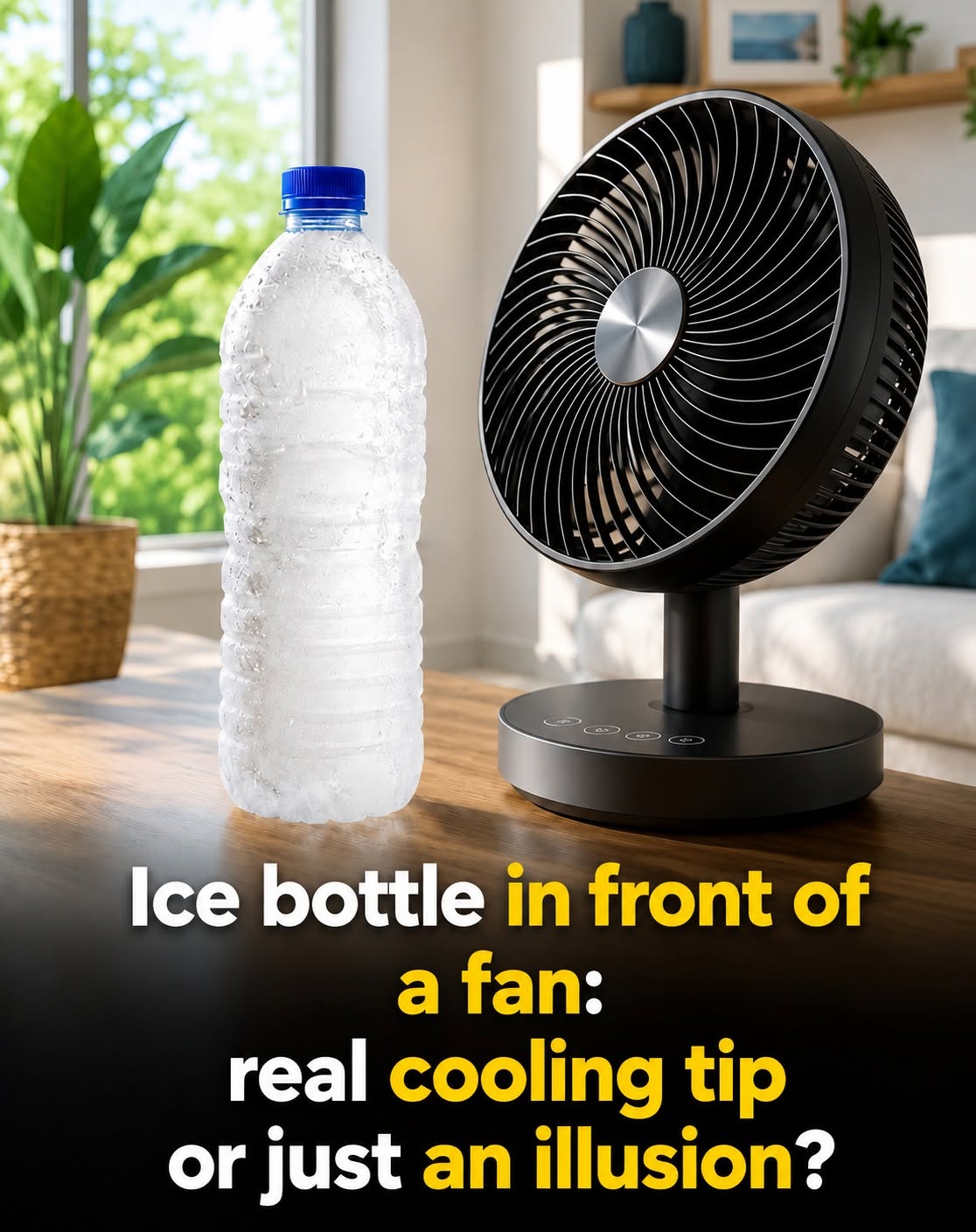
When temperatures soar and your home starts to feel unbearably hot, many people turn to simple DIY cooling tricks. One of the most popular involves placing a frozen bottle of water in front of a fan to create a homemade cooling system.
The idea sounds almost too good to be true: a cheap alternative to air conditioning using nothing more than a fan and a bottle of ice. But does it really work?
The answer is yes—but only to a certain extent.
While a frozen bottle can make the airflow from a fan feel cooler, it does not transform a standard fan into an air conditioner. Understanding why requires a quick look at the science behind both fans and ice.
Why Does the Air Feel Cooler?
A standard fan does not actually reduce the temperature of a room. Instead, it moves air across your skin, helping sweat evaporate more quickly.
This evaporation process removes heat from the body and creates the sensation of cooling.
When you place a frozen bottle in front of the fan, a second cooling effect appears.
As the ice melts, it absorbs heat from the surrounding air. Scientists call this the latent heat of fusion. During the melting process, ice can absorb a significant amount of heat energy without changing temperature.
The air passing close to the frozen bottle becomes slightly cooler before reaching you.
This is why the breeze feels fresher than the air produced by the fan alone.
However, the effect is highly localized. The cooling is felt mainly in the direct airflow rather than throughout the entire room.
How Much Cooling Does Ice Actually Provide?
A kilogram of ice absorbs approximately 334 kilojoules of energy as it melts.
If a frozen bottle melts over two hours, the average cooling effect is roughly equivalent to around 46 watts.
To put that into perspective, even a small portable air conditioner typically delivers thousands of watts of cooling power.
This means the bottle-and-fan trick can create a pocket of cooler air around a person but cannot significantly lower the temperature of an entire room.
The walls, furniture, floors, and ceiling continue to store and release heat throughout the day.
But the biggest surprise comes when you consider where the ice is actually coming from and how it affects overall energy use.
For Complete Cooking STEPS Please Head On Over To Next Page Or Open button (>) and don’t forget to SHARE with your Facebook friends.
