
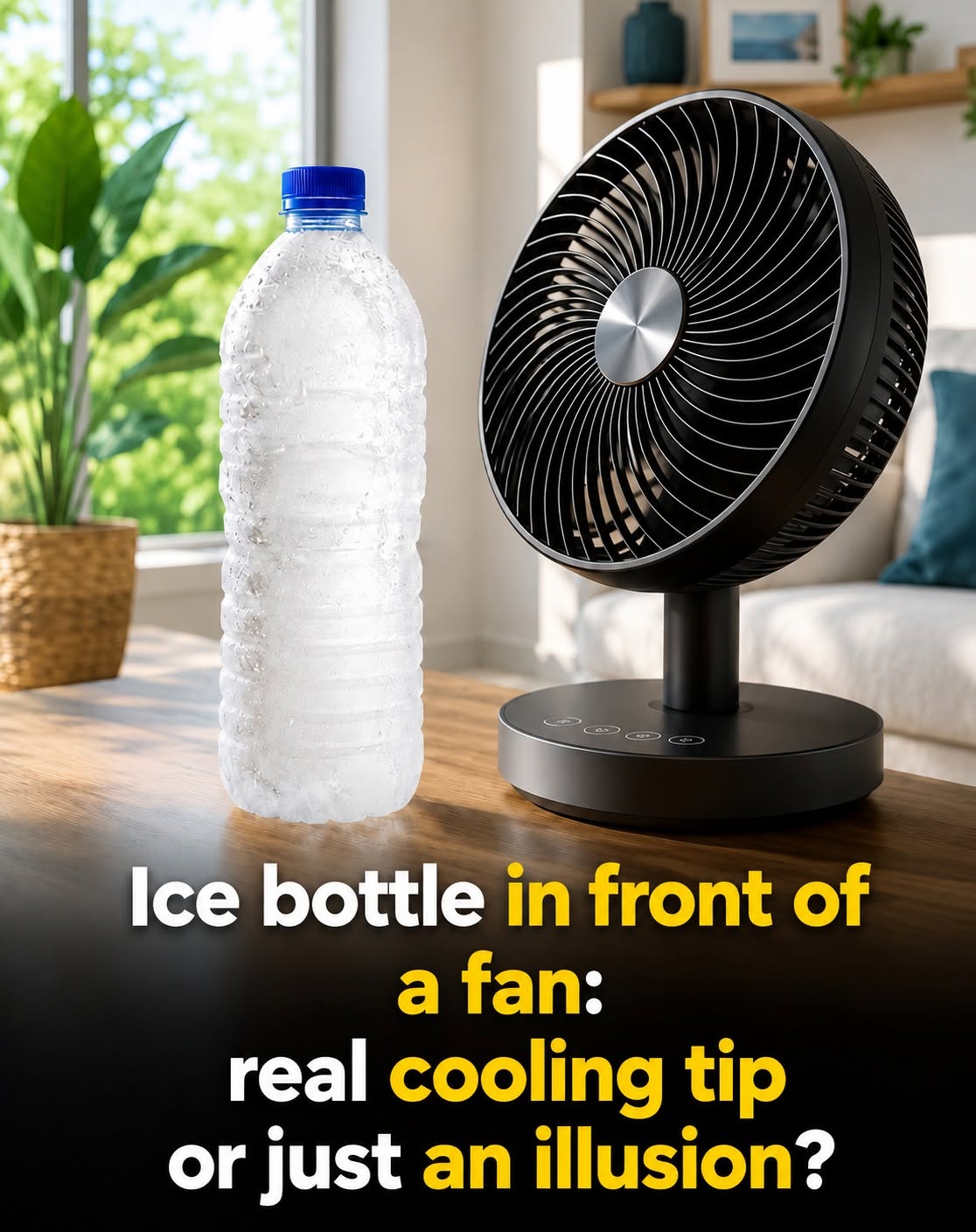
Can This Trick Really Cool an Entire Room?
Unfortunately, no.
The cooling effect is temporary and concentrated only near the fan’s airflow. Sitting directly in front of the setup may feel noticeably more comfortable, especially during the first hour or two.
However, the overall room temperature remains largely unchanged.
One important detail many people overlook involves the freezer itself.
If the bottle is frozen inside a freezer located in the same home, the freezer must remove heat from the water and release even more heat into the surrounding room while doing so.
In simple terms, the freezer generates more heat than the frozen bottle later removes.
This is why the technique cannot compete with true air conditioning systems, which actively transfer heat outside the building.
How to Use the Frozen Bottle Trick Safely
Step 1: Leave Space in the Bottle
Water expands when it freezes.
Never fill a bottle completely before freezing it. Leave approximately one-quarter of the bottle empty to prevent cracking or bursting.
Always use a sturdy bottle with a secure lid.
Step 2: Collect Condensation
As the ice melts, moisture from the air condenses on the outside of the bottle.
Place the bottle on a tray, plate, or absorbent cloth to catch the water.
Keep the setup away from electrical devices, extension cords, power strips, computers, televisions, and chargers.
Water and electricity should never be mixed.
Step 3: Direct the Airflow Toward People
The cooling effect works best when aimed directly at an occupied area.
Position the bottle a short distance in front of the fan without blocking its air intake or blades.
A steady stream of air directed toward a bed, sofa, or desk generally provides better comfort than oscillating the fan across the entire room.
Heatwave Safety Comes First
Although fans provide relief, they are not always sufficient during extreme heat.
Health organizations emphasize that fans alone may not prevent heat-related illnesses when indoor temperatures become excessively high.
During heatwaves, additional precautions are essential:
Drink water regularly throughout the day.
Cool your skin with damp cloths or lukewarm showers.
Close blinds, curtains, and shutters during the hottest hours.
Ventilate your home when outdoor temperatures become cooler.
Spend time in air-conditioned spaces if available.
The frozen bottle trick can help, but the most effective cooling strategies often involve preventing heat from entering the home in the first place.
For Complete Cooking STEPS Please Head On Over To Next Page Or Open button (>) and don’t forget to SHARE with your Facebook friends.
